SALEM, OR - Before attention fully turns toward Season 36, there is still plenty worth remembering about the season that brought 2K OLF into the summer break. Season 35 featured one of the league's most dominant regular-season teams, several explosive offenses, a brutally crowded AFC playoff race, a familiar championship contender refusing to go away, and quarterback numbers that made 5,000-yard seasons part of the conversation at the top of the leaderboard.
The final standings tell part of the story, but the numbers underneath them show just how different the paths to success were. The Pittsburgh Steelers overwhelmed opponents with balance and defense, the Las Vegas Raiders and Miami Dolphins turned games into track meets, the Dallas Cowboys remained the team everyone in the NFC eventually had to deal with, and several clubs discovered that even a winning record provided no guarantee of playing beyond Week 18.
Pittsburgh Was the Regular Season's Measuring Stick
No team finished with a better record than the Pittsburgh Steelers, who went 15-2 and ran away with the AFC North. What separated Pittsburgh from nearly every other contender was not simply the win total, but how decisively the Steelers built it.
Pittsburgh scored 613 points while allowing only 297, producing a league-best +316 point differential. The Steelers were also a perfect 8-0 at home, went 6-0 inside the division and finished 11-1 against AFC opponents. Even in a season filled with high-powered offenses, Pittsburgh's ability to score while keeping opponents off the scoreboard gave the Steelers the league's most complete regular-season résumé.
That dominance carried into the postseason, although the path was hardly easy. Pittsburgh survived the Los Angeles Chargers 35-34 in the Divisional Round, advancing on Isaac Burr's touchdown pass to Tutu Atwell with eight seconds remaining despite committing five turnovers. One week later, the Steelers' defense completely changed the AFC Championship Game, returning three interceptions for touchdowns in a 48-28 victory over the Las Vegas Raiders. The win sent Pittsburgh to the Super Bowl for the first time in franchise history.
The AFC Was Absolutely Loaded
Pittsburgh may have owned the league's best record, but there was very little breathing room behind the Steelers.
The Buffalo Bills and Las Vegas Raiders each finished 13-4, while the Houston Texans and Kansas City Chiefs went 12-5. The Indianapolis Colts, Los Angeles Chargers, Miami Dolphins and Jacksonville Jaguars all finished 11-6, while the Cincinnati Bengals and Baltimore Ravens both went 9-8. In total, an incredible 11 AFC teams finished with winning records.
That created a remarkable situation in which two 11-win teams - Miami and Jacksonville - still found themselves outside the playoff field, while the NFC eventually sent an 8-9 Detroit team to the postseason. The difference between the two conferences made almost every late-season AFC matchup matter, because dropping even one or two games could completely alter a team's postseason path.
Las Vegas emerged from that crowd as one of Pittsburgh's biggest challengers. The Raiders finished 13-4, won their final five regular-season games and worked their way through the postseason before Pittsburgh ended the run in the conference championship.
Nobody Scored More Than Las Vegas
While Pittsburgh produced the league's largest point differential, the Las Vegas Raiders led everyone with 628 points scored. The Miami Dolphins were barely behind with 626, the Dallas Cowboys finished with 618 and Pittsburgh scored 613, giving Season 35 four teams that surpassed 600 points.
The Raiders' offensive numbers were reflected at quarterback, where Desmond Newman finished the regular season with 5,020 passing yards and a league-leading 52 touchdown passes while completing 73.2 percent of his attempts. His 127.7 quarterback rating was even more impressive considering the volume of the offense.
That combination of efficiency and explosiveness helped make Las Vegas one of the most dangerous teams in the league. Even when the Raiders eventually fell short of the Super Bowl, they spent most of Season 35 proving that opponents could never assume a lead was safe.
Joe Burrow Owned the Passing Yardage Crown
Newman led the league in touchdown passes, but Cincinnati Bengals quarterback Joe Burrow finished atop the passing-yardage leaderboard with 5,258 yards. Burrow completed 69.5 percent of his attempts while throwing 50 touchdowns against only seven interceptions, giving him one of the most statistically impressive quarterback seasons on the board.
Kansas City Chiefs quarterback Patrick Mahomes was not far behind with 4,943 yards, while Miami Dolphins quarterback Marc Cohen reached 4,731. Pittsburgh's Isaac Burr threw 48 touchdown passes during the regular season, and several other quarterbacks cleared 4,000 yards.
The sheer number of productive passing attacks made Season 35 difficult on defenses, but Burrow's combination of volume, touchdowns and ball security still stands out. Cincinnati's 9-8 finish prevented that production from becoming one of the postseason's defining stories, yet his individual season deserves to be remembered among the year's best performances.
Dallas Continued to Set the Standard in the NFC
The NFC did not have the same collection of double-digit-win teams as the AFC, but it still had one familiar problem waiting for everyone in the postseason: the Dallas Cowboys.
Dallas finished 12-5, won the NFC East and scored 618 points. The San Francisco 49ers went 11-6 to claim the NFC West, the Green Bay Packers captured the NFC North at 10-7 and the Tampa Bay Buccaneers won the NFC South at 9-8. The Philadelphia Eagles and New York Giants also finished 9-8, while the Detroit Lions grabbed the final playoff position at 8-9.
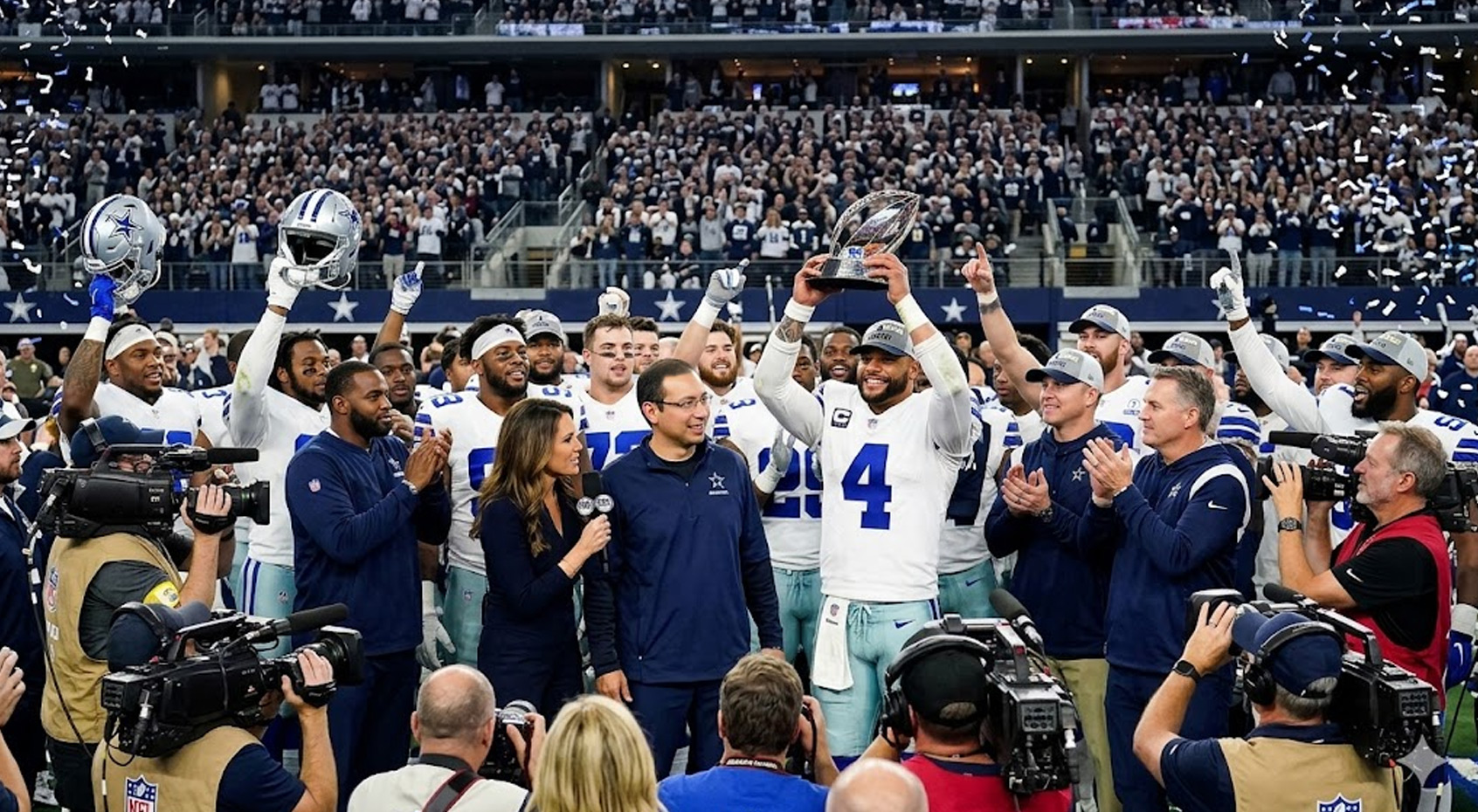
Dallas entered the postseason chasing a third consecutive championship and once again found its way through the conference. The Cowboys first defeated the Tampa Bay Buccaneers 41-31 in the Divisional Round, then delivered one of their strongest performances of the season in a 44-21 NFC Championship Game victory over the Green Bay Packers. Dak Prescott threw three touchdowns without an interception, while Javonte Williams rushed for 200 yards as Dallas reached its third straight Super Bowl.
That run reinforced what had already become obvious by the end of Season 35: teams in the NFC could have strong seasons, win divisions and survive playoff games, but eventually the road still seemed to lead through Dallas.
The NFC Playoff Race Left Almost No Margin
If the AFC was defined by an abundance of winning teams, the NFC playoff race was defined by how tightly packed the middle of the conference became.
The Philadelphia Eagles and New York Giants both finished 9-8. Detroit secured a postseason berth at 8-9, while the New Orleans Saints also finished 8-9 but remained outside the playoff field. The Minnesota Vikings and Chicago Bears each ended the year 7-10, leaving several teams separated by only one or two games when the final postseason positions were settled.
That is part of what makes some of the Season 36 changes around the conference so interesting. Minnesota finished only one game behind Detroit despite opening the season 0-4, while the Carolina Panthers showed late improvement with a three-game winning streak before finishing 6-11.
The standings will reset when Season 36 begins, but the gap between the NFC's middle tier and its playoff field was small enough that a handful of improved teams could completely reshape the conference.
Pittsburgh Finished the Job
By the time the playoff field had been reduced to two teams, Season 35 had produced a Super Bowl built around two very different kinds of history.
The Dallas Cowboys arrived trying to become only the second franchise in league history to complete a three-peat. The Pittsburgh Steelers arrived after a 15-win season and their first Super Bowl appearance in franchise history. Dallas represented an established dynasty attempting to extend its reign, while Pittsburgh represented a franchise trying to reach the top for the first time.
This time, the newcomer won.
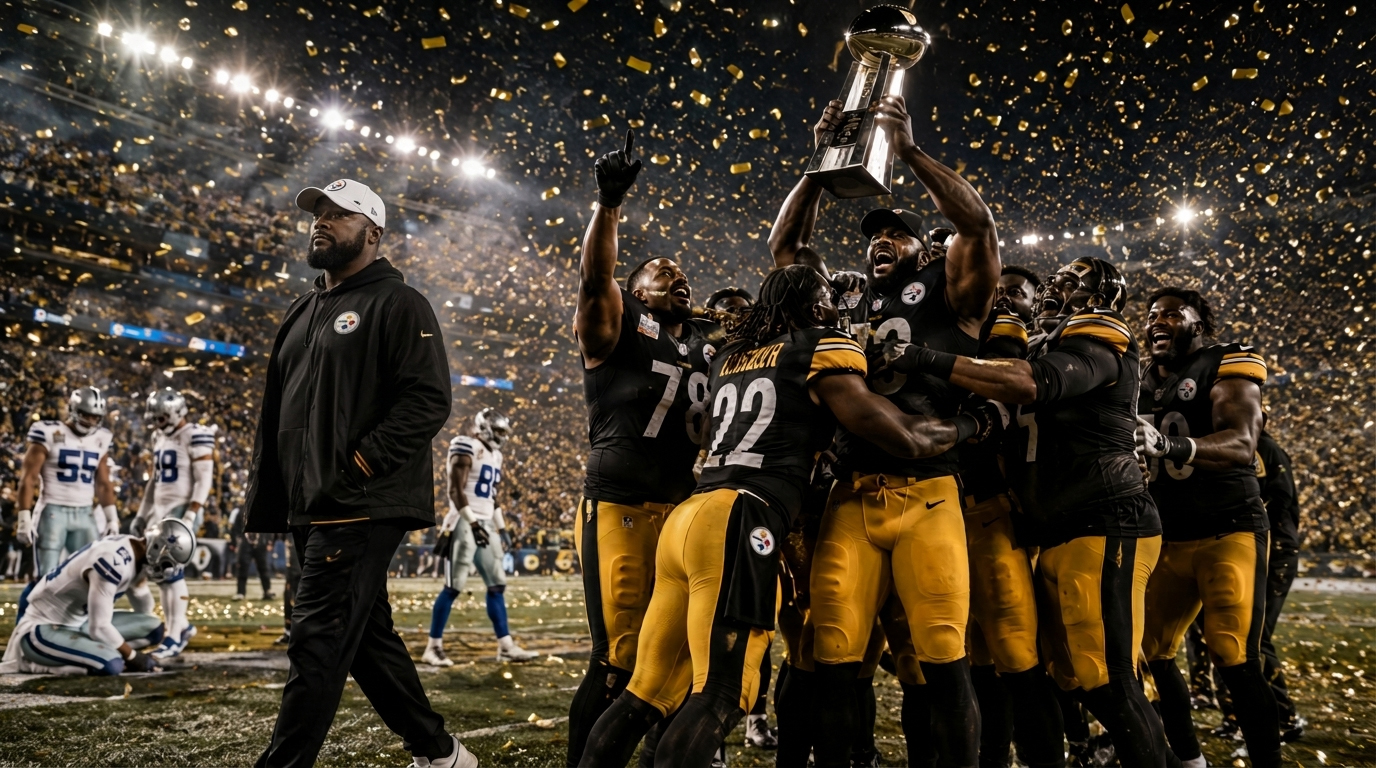
Pittsburgh completed its remarkable season with a 28-14 Super Bowl victory over the Dallas Cowboys, capturing the first championship in Pittsburgh Steelers franchise history and ending Dallas' bid for a third consecutive title. Jaylen Warren rushed for 117 yards and two touchdowns, while the Steelers defense intercepted Prescott twice, recorded five sacks and recovered three forced fumbles.
For a team that had already produced the league's best record and largest point differential, the championship completed the story. Pittsburgh did not simply dominate the regular season and fall short when the stakes became highest. The Steelers survived a one-point playoff scare, overwhelmed one of the league's most explosive offenses in the AFC Championship Game, and then beat the two-time defending champions with everything on the line.
Mike Tomlin Rode Off Into the Sunset
Then came one final chapter to Pittsburgh's championship season.
After guiding the Steelers to the first Super Bowl championship in franchise history, Mike Tomlin stepped down as Pittsburgh's head coach. Tomlin's decision closed his tenure in almost storybook fashion: rather than walking away after a disappointing finish or a season of questions, he left with the Steelers standing alone at the top of the league. His departure turned Season 35 into more than Pittsburgh's breakthrough year; it became the final chapter of an era.
There probably is not a better way to leave. Tomlin finally brought Pittsburgh the championship that had eluded the franchise, watched the confetti fall after beating the league's reigning dynasty, and then effectively rode off into the sunset on top of the football world.
For whoever eventually follows him, the standard could not have been set any higher.
Season 35 Set a High Bar
The final numbers make Season 35 look like an offensive season, and in many ways it was. Four teams topped 600 points, two quarterbacks surpassed 5,000 passing yards, and several others produced numbers that would normally be enough to dominate a league leaderboard.
Yet the season ultimately belonged to a Pittsburgh Steelers team that paired an explosive offense with the league's stingiest defense and completed a 15-2 regular season by winning the first championship in franchise history. Dallas remained the NFC standard and came within one victory of a historic three-peat, Las Vegas produced the league's highest-scoring offense, and the AFC playoff race punished good teams simply for existing in the wrong conference.
That combination of dominant teams, explosive individual performances, crowded playoff races and a first-time champion gave Season 35 its identity. As Season 36 approaches with new users, returning veterans and another round of roster changes, those results provide the benchmark everyone will be chasing when football returns.