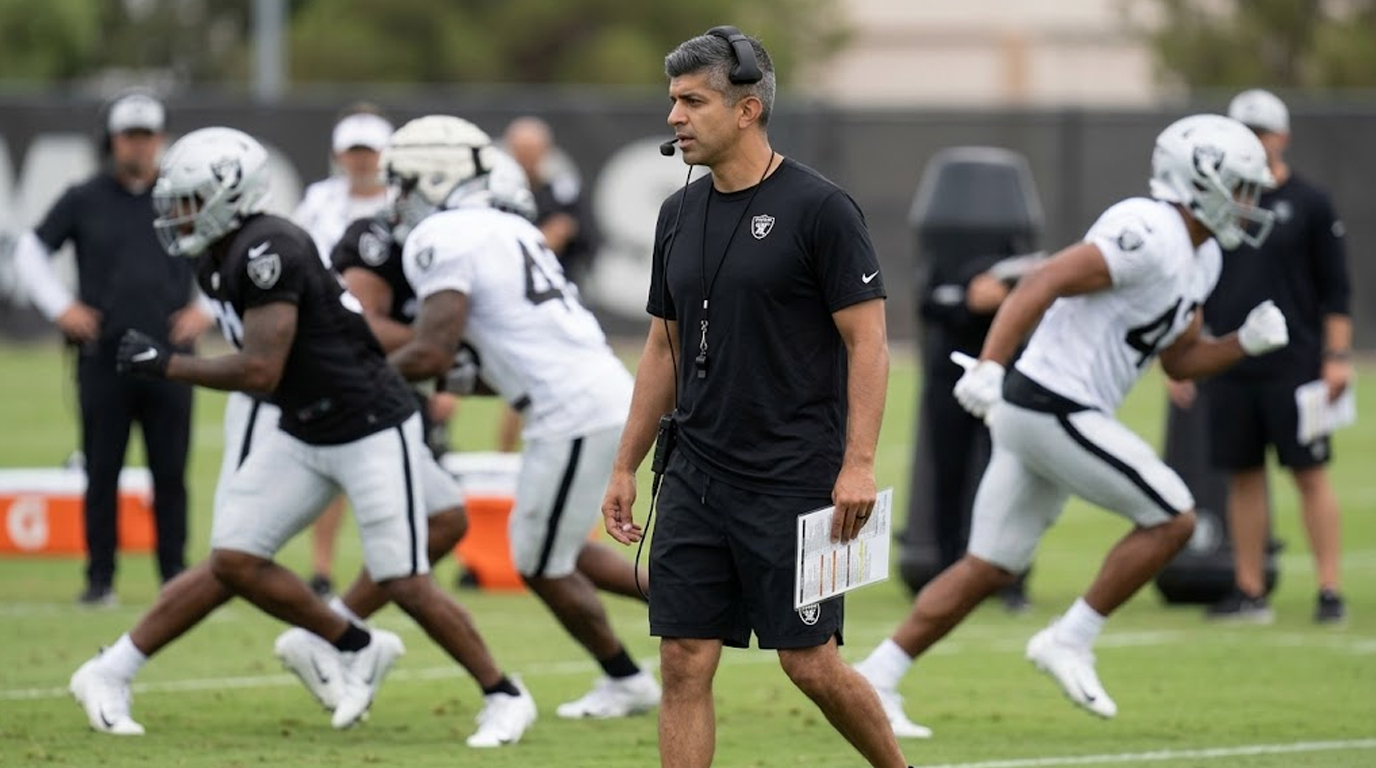
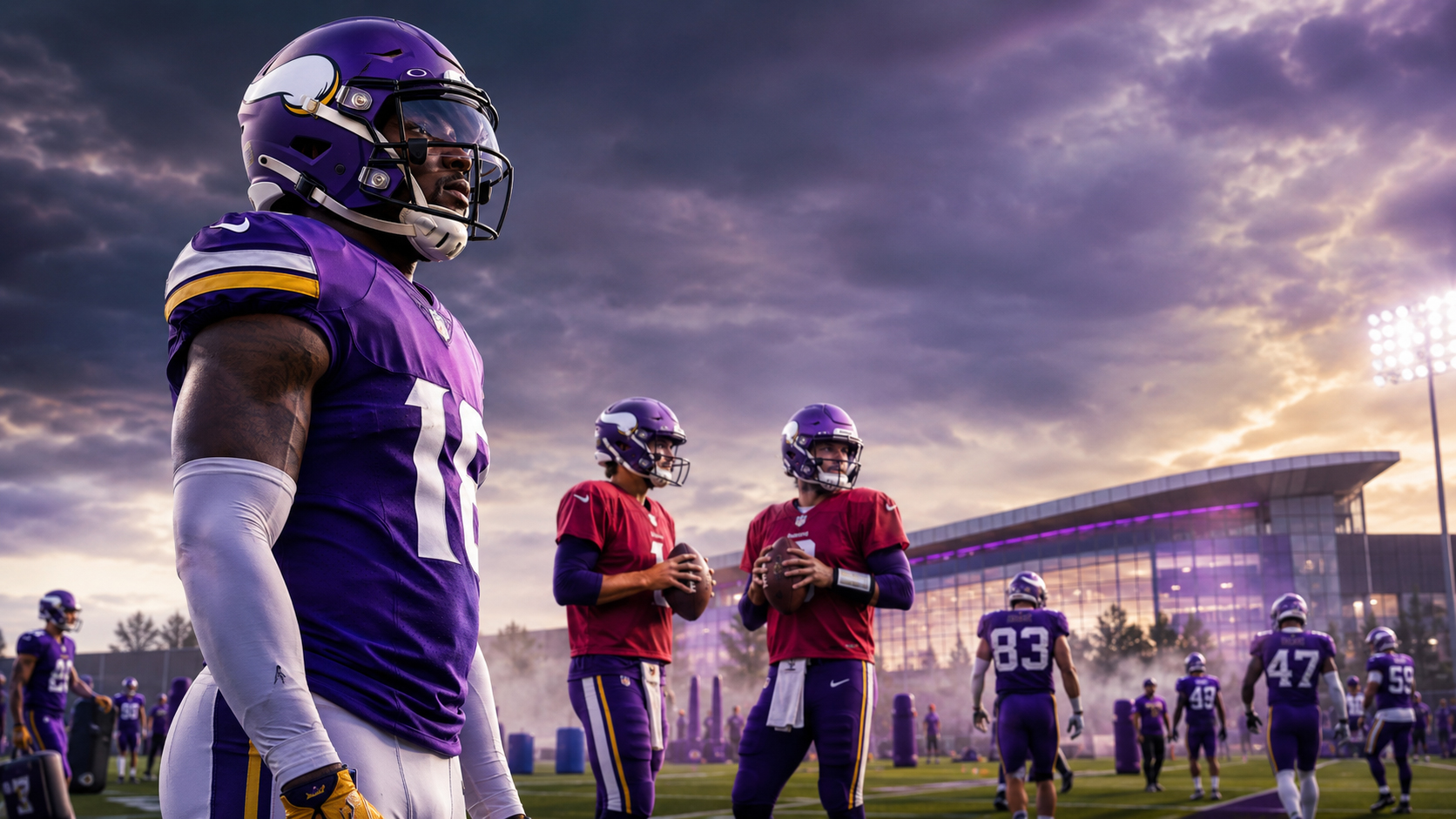
EAGAN, MN - The Minnesota Vikings enter Season 36 with considerably more change surrounding the franchise than their 7-10 record from a year ago might suggest. Mensah Tyler will take control of the team for Season 36, the quarterback room has become one of the most intriguing in the league, several important veterans have departed, and Minnesota used a nine-player rookie class to begin reshaping a defense that will look noticeably different when the new season begins.
Season 35: A Slow Start Proved Too Much to Overcome
Minnesota could not have started Season 35 much worse. The Vikings opened 0-4, losing to Las Vegas, Chicago, Detroit and Green Bay while being outscored 133-74 over that stretch. Their first victory finally came in Week 5 with a 20-10 road win over Detroit.
The Vikings eventually showed that they were capable of playing much better football. Beginning with that Detroit win, Minnesota won four of its next five games, including victories over Cincinnati, Arizona and Los Angeles. That run brought the Vikings back to 4-5 and briefly gave them a path back into the postseason conversation.
Another four-game losing streak followed, however, dropping Minnesota to 4-9. The Vikings made one final push by beating Chicago, New York and Green Bay in consecutive weeks, but a 27-16 loss at Seattle in Week 18 ended the season at 7-10. Minnesota finished third in the NFC North and ninth in the NFC playoff standings, one game behind Detroit for the final postseason position.
McCarthy Showed Plenty to Build Around
Despite the losing record, J.J. McCarthy gave Minnesota some encouraging production at quarterback. He completed 65.3 percent of his passes for 3,875 yards, 27 touchdowns and 10 interceptions while finishing with a 96.5 quarterback rating.
Justin Jefferson remained the centerpiece of the passing game with 92 receptions for 1,075 yards and nine touchdowns. Jordan Addison added 660 yards and three scores, while Justin Franklin contributed another 680 yards and six touchdowns. D’Andre Swift led Minnesota on the ground with 830 yards and six touchdowns.
Overall, the Vikings averaged 22.3 points and 320.8 yards per game. They moved the ball reasonably well through the air, averaging 225.1 passing yards per game, but the rushing attack averaged just 95.6 yards. Minnesota ultimately scored 379 points while allowing 400.
A Major Change at Quarterback
McCarthy’s Season 35 production would normally make the quarterback position one of the more settled areas on the roster.
Minnesota had other ideas.
The Vikings signed Kyler Murray in March, adding an accomplished veteran to a room that already included McCarthy. Murray brings extensive starting experience along with the mobility to give Minnesota a completely different option offensively. The competition has continued into the offseason program, with Murray and McCarthy splitting practice repetitions.
Minnesota also brought Carson Wentz back, giving the Vikings a remarkably deep quarterback room entering camp. Wentz joins Murray, McCarthy and Max Brosmer, leaving Minnesota with several options as the team determines exactly what its offense will look like when Season 36 begins.
For the Vikings’ new user, the first major decision may therefore be one that many teams around the league would love to have: figuring out which quarterback best fits the way they want to play.
Jefferson Gets Another Weapon
Minnesota also added another proven target to an already dangerous receiving corps by agreeing to terms with Jauan Jennings.
Jennings joins Jefferson and Addison after catching 55 passes for 643 yards and a career-high nine touchdowns last season with San Francisco. His size and physical style should give Minnesota another option in situations where Jefferson and Addison command most of the defensive attention.
On paper, Jefferson, Addison and Jennings give whichever quarterback emerges from the competition one of the more interesting groups of receivers in the conference.
The Defense Is Going to Look Different
The largest changes may be on the other side of the football.
Minnesota’s Season 35 defense produced 48.5 sacks, and Jonathan Greenard was the biggest reason why. Greenard finished with 15.5 sacks, second-most in the league, while Dallas Turner added 10 and Jonathan Allen recorded eight.
Greenard will not be back.
Minnesota traded its top pass rusher to Philadelphia during the draft, sending Greenard and the 244th overall selection in exchange for the 98th pick and a third-round selection next year.
The Vikings also released defensive linemen Jonathan Allen and Javon Hargrave, while longtime safety Harrison Smith was released in March. The departures leave significant experience and production to replace throughout the defense.
That turnover helps explain what Minnesota did next.
Minnesota Goes Heavy on Defense in the Draft
The Vikings used the 18th overall pick on Florida defensive lineman Caleb Banks, immediately adding a potential building block to the front seven.
Minnesota stayed on defense in the second round with Cincinnati linebacker Jake Golday at No. 51 before returning to the defensive line with Domonique Orange at No. 82. Tackle Caleb Tiernan followed at No. 97, and Minnesota used the selection acquired in the Greenard trade to take Miami safety Jakobe Thomas at No. 98.
That meant four of Minnesota’s first five selections addressed the defense, including two defensive linemen after the departures of Greenard, Allen and Hargrave.
The Vikings completed their nine-player class with fullback Max Bredeson at No. 159, cornerback Charles Demmings at No. 163, running back Demond Claiborne at No. 198 and center Gavin Gerhardt at No. 235. All nine rookies have since signed their first contracts.
Mensah Tyler Inherits an Interesting Roster
Minnesota will enter Season 36 under new leadership, with Mensah Tyler stepping in to take control of the franchise.
The roster Tyler inherits is not without questions, but it certainly is not short on possibilities. Justin Jefferson remains the offensive centerpiece. Jordan Addison and Jauan Jennings provide additional weapons. The quarterback room offers multiple directions the offense could go, and the Vikings invested heavily in rebuilding a defensive front that lost several recognizable names during the offseason.
There is also an interesting contrast between the team Minnesota was in Season 35 and the one preparing for Season 36. Last year’s Vikings relied on a productive J.J. McCarthy-led passing game and one of the league’s most productive pass rushers, but never found enough consistency to overcome their early-season hole. This year’s roster may need to find different ways to win.
For Tyler, that means stepping into a situation that offers both flexibility and pressure. The Vikings have enough talent to be competitive, but several of the franchise's biggest questions will now be answered by a new voice on the sidelines.
Three Questions Entering Season 36
The most obvious question is at quarterback. McCarthy produced a solid Season 35, but Murray’s arrival creates legitimate competition for the job. How the new Vikings user evaluates those two quarterbacks - and which skill set better fits their offense - could shape Minnesota’s entire season.
The second question is whether the rebuilt defensive front can replace Greenard’s production. Fifteen and a half sacks do not disappear easily, and Minnesota will be asking young players such as Banks, Golday and Orange to help a defense transition away from several veterans.
Finally, there is the Mensah Tyler factor. Season 36 represents a new beginning for Minnesota not only because of the roster turnover, but because Tyler will now be the one making the key decisions. How quickly he becomes comfortable with the Vikings and establishes an identity with the franchise will be another storyline worth following.
Season 36 Outlook
Minnesota’s 7-10 finish does not tell the entire story of Season 35. The Vikings recovered from an 0-4 start, briefly fought their way back into contention, and won three consecutive games late in the season before ultimately falling short of the playoffs.
Now nearly every important part of the franchise has a new wrinkle. There is competition at quarterback, another weapon alongside Jefferson, significant turnover on defense and a rookie class built heavily around replenishing that side of the football.
Add Mensah Tyler taking control of the franchise, and Minnesota becomes one of the more difficult teams to predict entering Season 36.
That might also make the Vikings one of the more interesting teams to watch.