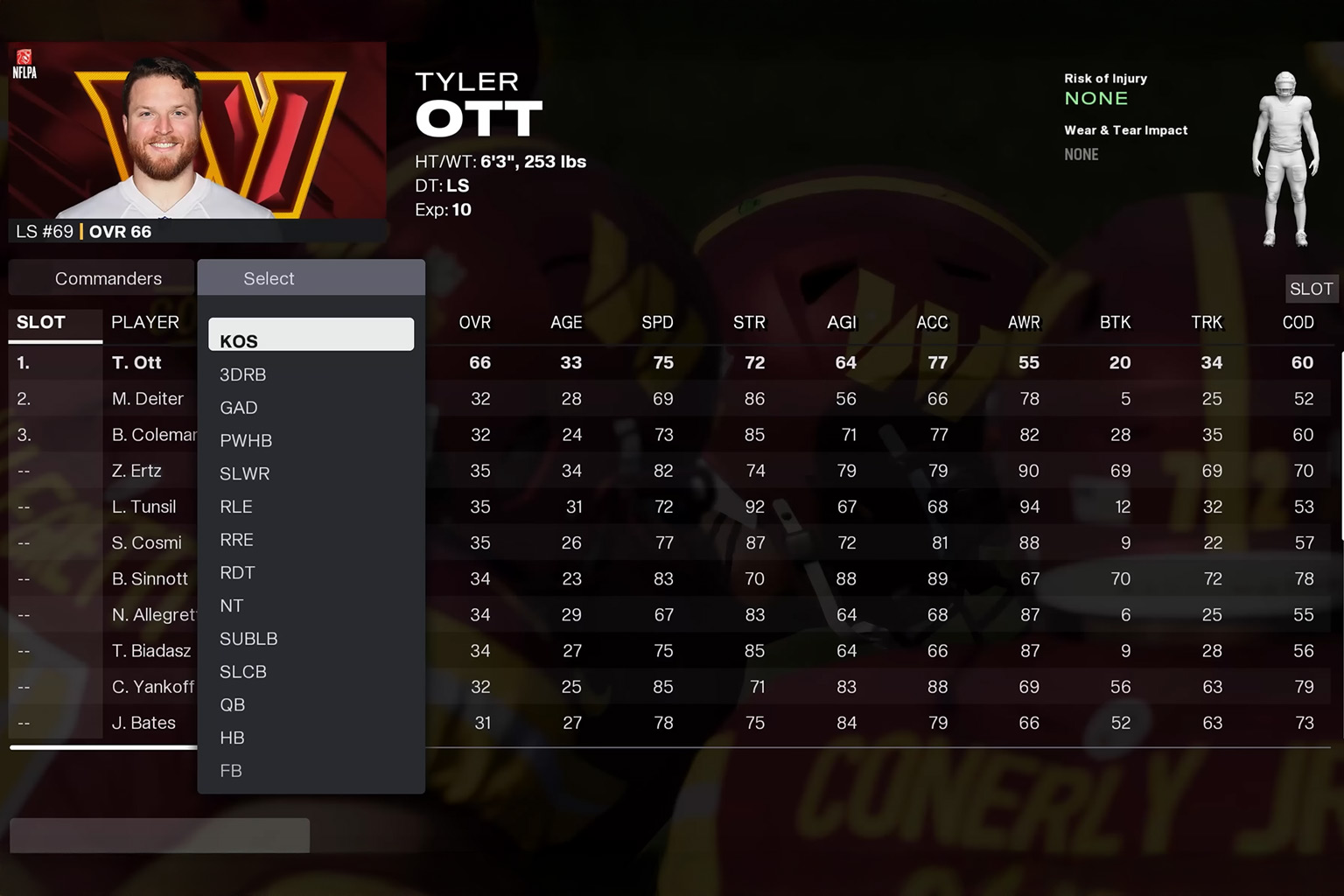
SALEM, OR - Madden 26 doesn't just look different - it plays different. With a major focus on physics-based interactions and player fatigue, this year's game brings a new level of realism to every snap. Whether you're breaking a tackle, getting stonewalled at the goal line, or managing substitutions, it's all governed by momentum, contact, and strategy.
The days of predictable animations and unlimited stamina are over. Here's how Madden 26 is raising the bar on control and realism.
Expanded physics-based gameplay
Building on last year's Boom Tech, Madden 26 introduces more tackle types driven by physics rather than scripted outcomes:
- Wrap catch tackles for DBs trying to prevent big gains
- In-range lunges where defenders dive or lean into a tackle without losing balance
- "Unprepped" hit sticks that trigger harder hits when the ball carrier is off-guard
These new tackle types join returning physics-based systems like hit sticks, cut sticks, and dive tackles - all of which now trigger based on timing, player positioning, and ratings matchups.
Timing-based tackle and stiff arm controls
Timing matters more than ever. EA has expanded last year's hit stick timing mechanic to a wide range of interactions:
- Strip-ball tackles
- Conservative wrap tackles
- Lunge and dive tackles
- Catch knockouts and swats
But it's not just defense - now, trucks and stiff arms are also timing-based. If you hit the input at just the right moment, you'll trigger more powerful animations and stand a better chance of breaking the tackle.
Reach-for-sticks mechanic
New in Madden 26, players can now reach for the first down or goal line during a tackle. Hold the right stick up when close to the sticks to trigger a reach attempt.
- If the player's arm is free and the tackle isn't complete, the ball will stretch forward
- AI-controlled players will only attempt this based on their Awareness (AWR) rating
- High risk: getting hit while reaching out raises the chance of a fumble
It's a small detail that adds big drama to short-yardage situations.
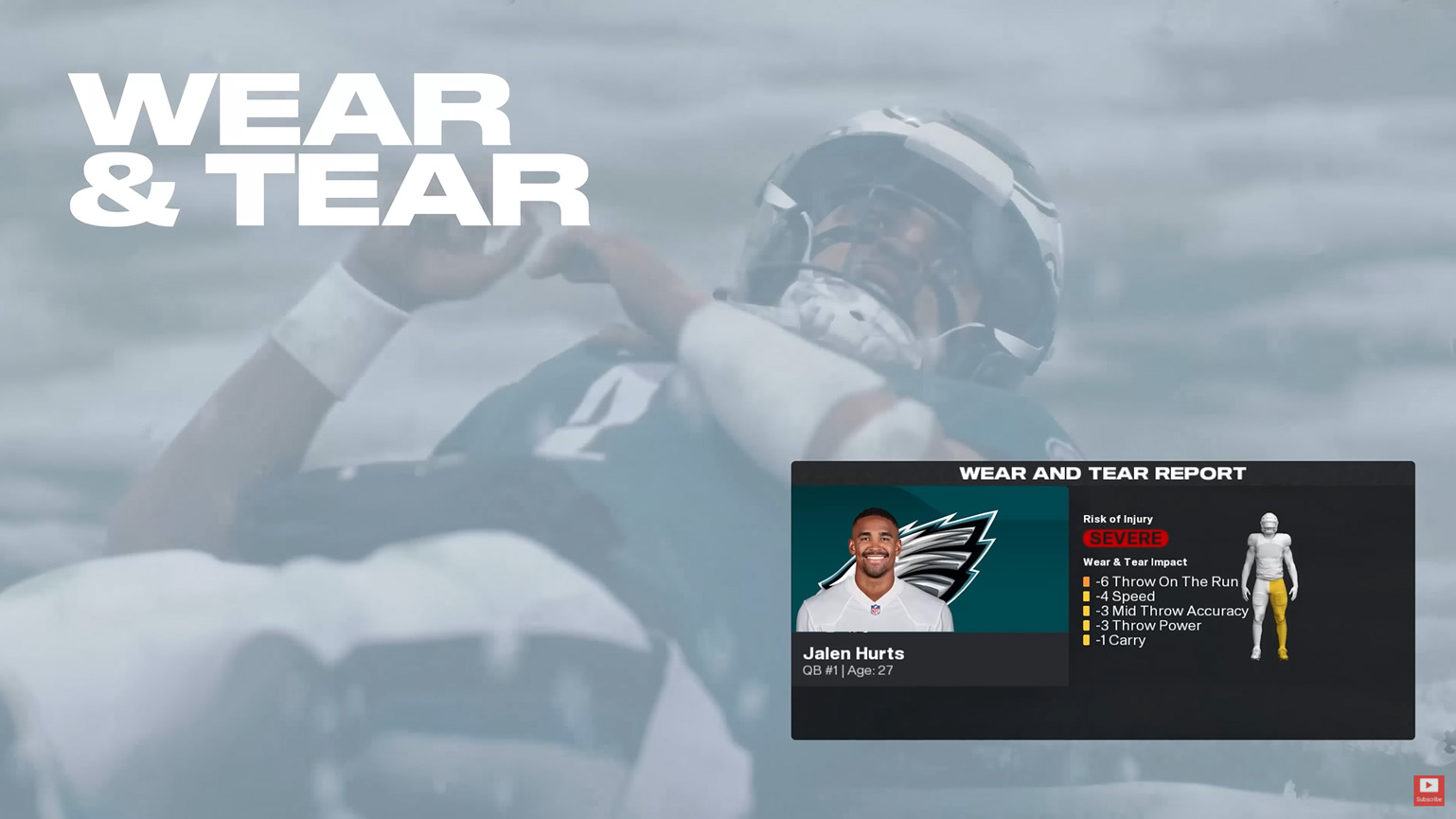
Wear & tear system adds fatigue realism
Madden 26 introduces a Wear & Tear system that tracks every hit and snap a player takes - over the course of a game and across an entire season.
- Heavier contact and longer plays wear players down faster
- Star players used too often will fatigue quicker in key moments
- The more a player wears down, the greater the risk for fumbles, drops, and stamina penalties
This system forces smarter rotation, particularly in Franchise and Superstar modes - but it affects all gameplay. If you're feeding one RB all game long or scrambling 15 times with your QB, they'll wear down, and eventually, you'll pay for it.
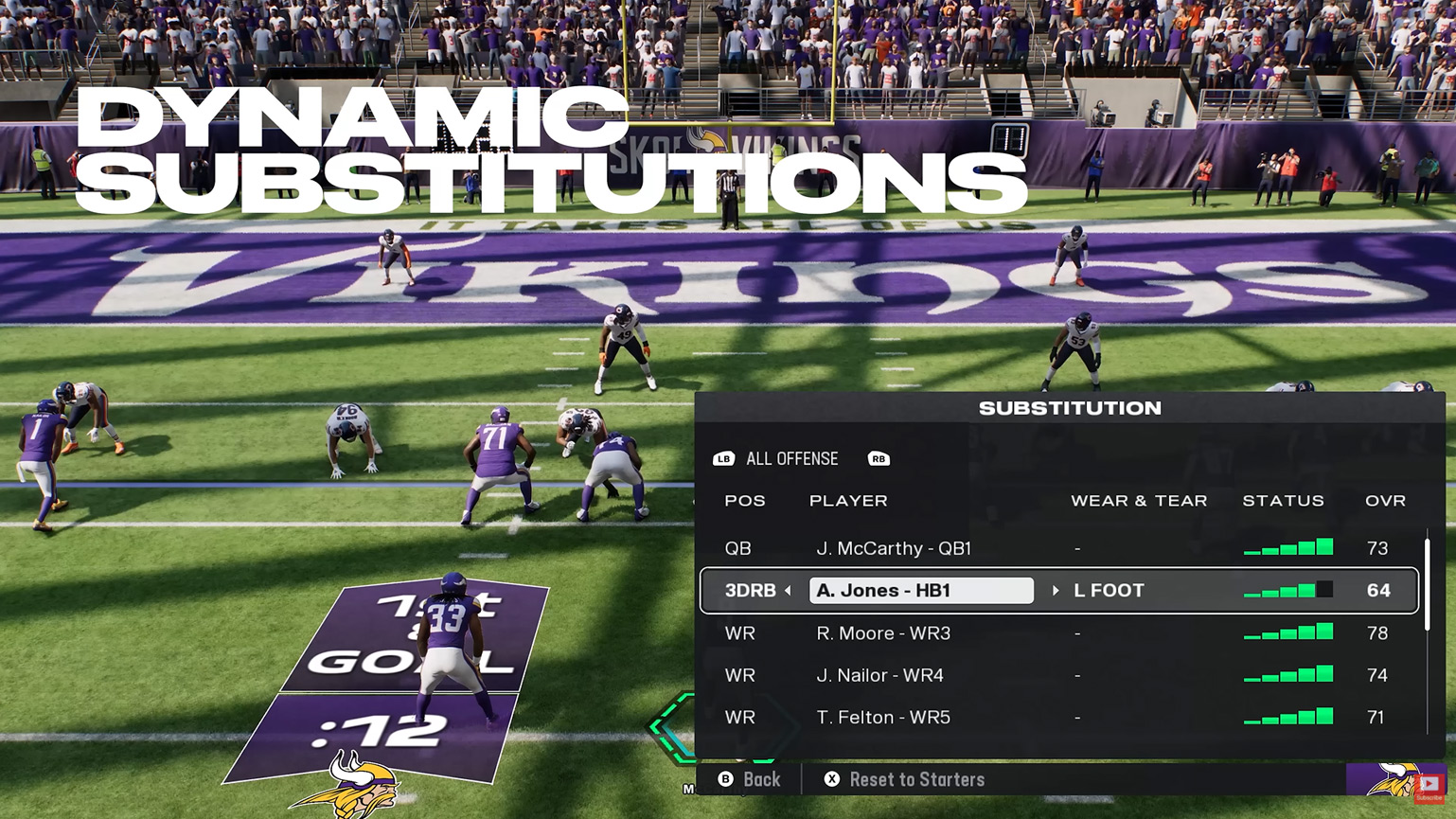
Dynamic subs without pausing
To help manage fatigue, Madden 26 adds dynamic substitutions that don't interrupt the game:
- Swap out tired players without calling a timeout or entering the pause menu
- Triggered by pre-play inputs or prompted when fatigue hits critical thresholds
- Lets you keep drives alive with fresh legs without breaking immersion
Combined with Wear & Tear, this gives you real-time roster management tools that can change how you handle long drives or late-game situations.
Block steering: control in the trenches
Defensive players now get more control when engaged with blockers thanks to block steering - a system that lets you:
- Steer the blocker left, right, or into the backfield using the left stick
- Maintain lateral movement when trying to get around the edge or plug a gap
- Apply realistic pressure or leverage based on size, momentum, and ratings
Block steering gives linemen and linebackers more user influence - no more feeling "stuck" in a block with no way to affect the play.
AI defenders now manage gaps intelligently
Block steering doesn't just benefit the user - AI-controlled defenders also fight for gap leverage more effectively. You'll see:
- Better pursuit angles based on the defensive scheme
- Interior linemen fighting to hold or collapse gaps
- Run fits that reflect modern football spacing and awareness
This system complements the new leverage-based blocking animations and adds another layer of authenticity to every play.
Fatigue penalties create risk-reward decisions
Because Wear & Tear affects both short- and long-term stamina, you'll have more high-risk/high-reward moments:
- Do you keep your star RB in on 3rd and 2 with 90+ carries logged?
- Do you let your WR return punts late in the game after 10 targets?
- Is your QB still accurate while scrambling at 40% stamina?
Knowing when to push a tired player and when to rotate is now part of your strategy - and one bad decision can shift momentum.
More than just animations - it's real football logic
Madden 26's new control and fatigue systems change how you approach every drive, every possession, and every player snap. Combined with physics-driven tackles, dynamic subs, and risk-reward mechanics like reach-for-sticks, these systems reward smart play and punish carelessness.
EA's goal here is clear: football isn't just about scheme - it's about endurance, decision-making, and physical control. And now, Madden reflects that better than ever.